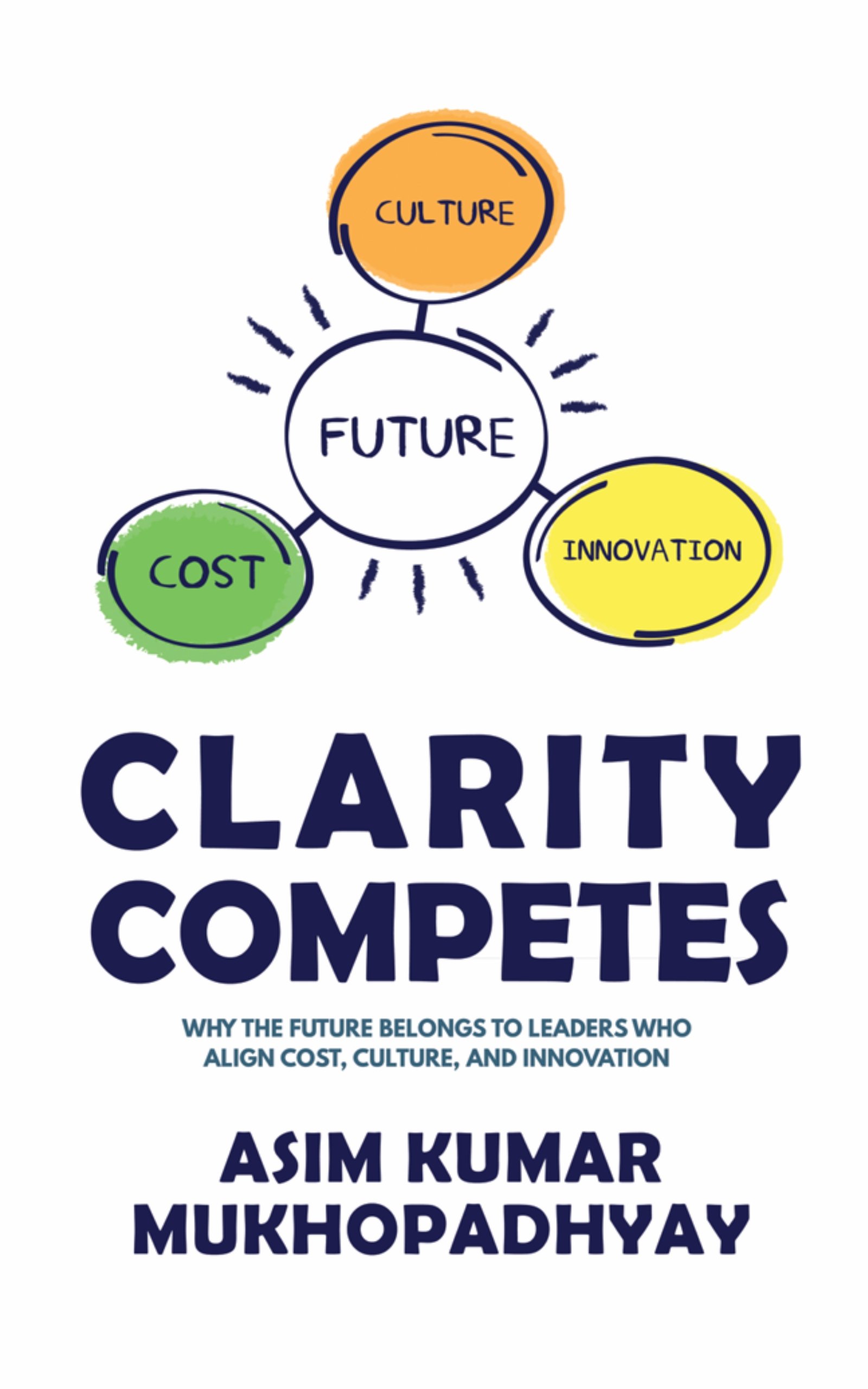
Where to buy
Carried by Amazon in every market, Barnes & Noble, Walmart, Waterstones, Booktopia, Kinokuniya, Flipkart, Google Books, Apple Books and Kobo. Printed on demand close to wherever it is ordered.
Listed with the worldwide trade network, so any bookstore or library can order it. Ask for it by ISBN: 978-1957456898 (paperback) or 978-1957456904 (hardcover).
What is inside
Cost reduction is often celebrated as a sign of business success. A company that cuts operating costs significantly may enjoy higher profits, improved margins, and positive attention from investors. However, reducing costs without considering the value delivered to customers, employees, and the market can create a dangerous illusion of success.
This chapter explores the Cost–Value Paradox through real-world examples such as Jet Airways, Kingfisher Airlines, General Motors, British Airways, BSNL, and MTNL. These organizations demonstrate how aggressive cost-cutting, poor strategic choices, or an inability to balance efficiency with innovation can weaken customer loyalty and long-term competitiveness. What appears efficient on paper can ultimately result in declining market share, disengaged employees, and lost customers.
The central message is that cost and value are not opposites—they must work together. While eliminating waste and improving efficiency are essential, cost reduction should never come at the expense of quality, trust, customer experience, or innovation. The true measure of success is not simply whether a company has become leaner, but whether customers and employees continue to recognize and experience meaningful value.
Sustainable businesses understand that cost discipline should serve as a foundation for innovation and value creation. Instead of pursuing short-term savings through reduced employee benefits, compromised quality, or diminished service, leaders must consider the long-term consequences of every cost decision. Opportunistic cost reductions can trigger a downward spiral: declining quality leads to declining trust, which ultimately weakens competitiveness.
The chapter emphasizes that leaders must learn to master cost and value simultaneously. Cost efficiency creates the foundation, while value creation drives sustainable growth. Companies that successfully navigate disruption do not simply cut costs; they build stronger customer relationships, encourage innovation, and create lasting competitive advantage.
Ultimately, the goal is not to spend less at any cost, but to eliminate waste while continuously increasing worth. By avoiding shortcuts and balancing cost discipline with value creation, organizations can move beyond short-term survival toward sustainable and exponential growth.
Excerpt
From “The Cost–Value Paradox”
Cost reduction is often celebrated as a sign of business success. A company that cuts operating costs significantly may enjoy higher profits, improved margins, and positive attention from investors. However, reducing costs without considering the value delivered to customers, employees, and the market can create a dangerous illusion of success.
This chapter explores the Cost–Value Paradox through real-world examples such as Jet Airways, Kingfisher Airlines, General Motors, British Airways, BSNL, and MTNL. These organizations demonstrate how aggressive cost-cutting, poor strategic choices, or an inability to balance efficiency with innovation can weaken customer loyalty and long-term competitiveness. What appears efficient on paper can ultimately result in declining market share, disengaged employees, and lost customers.
The central message is that cost and value are not opposites—they must work together. While eliminating waste and improving efficiency are essential, cost reduction should never come at the expense of quality, trust, customer experience, or innovation. The true measure of success is not simply whether a company has become leaner, but whether customers and employees continue to recognize and experience meaningful value.
Sustainable businesses understand that cost discipline should serve as a foundation for innovation and value creation. Instead of pursuing short-term savings through reduced employee benefits, compromised quality, or diminished service, leaders must consider the long-term consequences of every cost decision. Opportunistic cost reductions can trigger a downward spiral: declining quality leads to declining trust, which ultimately weakens competitiveness.
The chapter emphasizes that leaders must learn to master cost and value simultaneously. Cost efficiency creates the foundation, while value creation drives sustainable growth. Companies that successfully navigate disruption do not simply cut costs; they build stronger customer relationships, encourage innovation, and create lasting competitive advantage.
Ultimately, the goal is not to spend less at any cost, but to eliminate waste while continuously increasing worth. By avoiding shortcuts and balancing cost discipline with value creation, organizations can move beyond short-term survival toward sustainable and exponential growth.
Trailer
About the author

MD & Founder, Navtom Consulting · Mumbai, India
“Stardom’s entire ecosystem turns ideas into reality. From writing and publishing to post-publishing digital marketing, the team does a truly commendable job”
Asim Kumar Mukhopadhyay is a thought leader in cost competitiveness and enterprise leadership, with 40+ years across Tata Group, automotive, steel, mobility, and manufacturing. He is a Founder & CEO of NAVTOM Consulting.
Published by Stardom Books — written from the author’s own words, in the author’s name. Browse the catalogue
Start here
The Authority Quotient is a thirty-minute evaluation that measures your authority two ways — how you rate yourself, and what a stranger can verify — and ends with one specific recommendation, including which type of book is yours.
Find your Authority QuotientNo cost. Get detailed report. Includes specific recommendations.