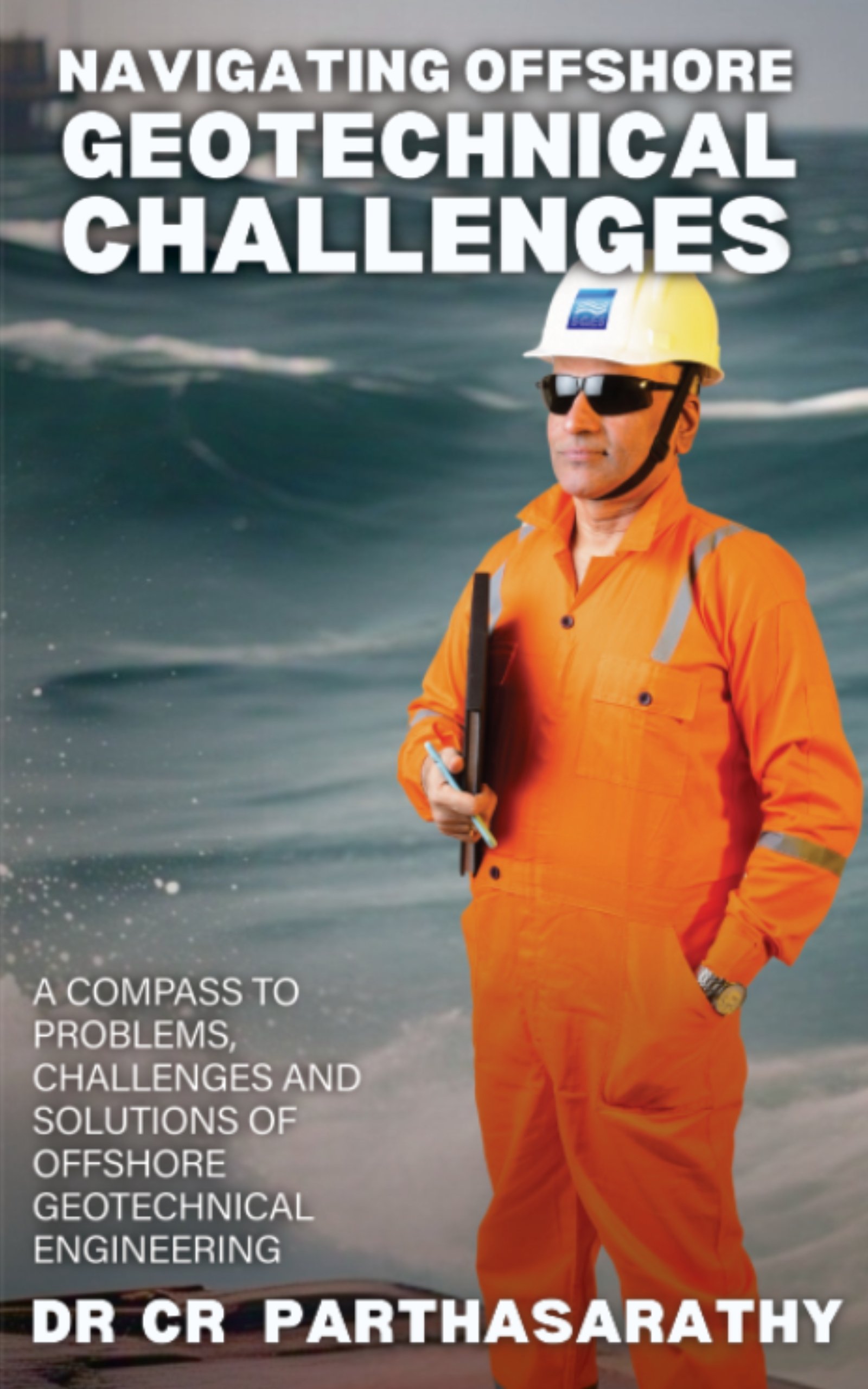
Where to buy
Carried by Amazon in every market, Barnes & Noble, Walmart, Waterstones, Booktopia, Kinokuniya, Flipkart, Google Books, Apple Books and Kobo. Printed on demand close to wherever it is ordered.
Listed with the worldwide trade network, so any bookstore or library can order it. Ask for it by ISBN: 978-1957456836 (hardcover).
What is inside
Offshore geotechnical engineering demands more than technical knowledge. Every project presents unique geological conditions, environmental uncertainties, and engineering challenges that require practical experience, informed decision-making, and adaptable solutions.
In Navigating Offshore Geotechnical Challenges, Dr. CR Parthasarathy draws upon nearly three decades of professional experience to provide a practical guide to understanding and addressing the complexities of offshore geotechnical engineering.
The book examines real-world engineering challenges across India, Indonesia, Malaysia, Abu Dhabi, and Saudi Arabia, highlighting how variations in soil conditions and geological formations influence investigation methods, foundation design, and construction.
Through detailed case studies and field-based insights, it explores critical aspects of offshore engineering, including:
Geophysical and geotechnical site investigations.
Shallow and deep foundation challenges.
Pile installation difficulties and premature refusal.
Jack-up rig assessments and mud mat installations.
Pipeline geotechnics and ground improvement techniques.
Risk assessment and practical engineering solutions.
Beyond technical analysis, the book incorporates perspectives from industry leaders, connecting engineering principles with lessons learned from offshore projects across different geographical regions. It also addresses the importance of leadership, continuous learning, and personal development in demanding engineering environments.
Designed for geotechnical engineers, offshore engineering professionals, consultants, researchers, and students, the book serves as a practical reference for understanding complex subsurface conditions and approaching engineering problems with greater clarity.
It offers experienced professionals an opportunity to learn from diverse project challenges while helping emerging engineers connect theoretical knowledge with practical applications.
Navigating Offshore Geotechnical Challenges brings together technical expertise, field experience, and industry perspectives to help engineers understand problems, evaluate alternatives, and develop informed solutions in the evolving offshore engineering landscape.
Excerpt
From “Introduction”
Our dependence on offshore energy and infrastructure is a defining characteristic of our time, driving engineering ever deeper into the planet's final frontier. The challenge: to harmonize the immense power of the ocean with the structures we build within it. This is the domain of offshore geotechnical engineering. This specialized field encompasses the design, construction, and long-term maintenance of foundations for critical marine structures—from the towering rigs that extract hydrocarbons to the elegant turbines that harness the wind. This discipline is not static; it evolves continuously, propelled by the need to overcome the formidable obstacles of the marine environment.
1.2 The Subsea Challenge
The offshore environment presents a daunting set of issues to the geotechnical engineer. We're confronted with geological conditions that defy easy categorization: unusual soil compositions, where pockets of gas lie hidden beneath the seabed, and where carbonate formations exhibit behaviors unlike anything encountered on land, the stratigraphies are orthogonally different in different geographies. Thus, these are the kinds of complexities that demand a deep understanding.
Then there are the relentless forces of nature: the crushing power of waves, the persistent push of currents, and the ever-present threat of wind. These elements combine to exert enormous loads on offshore structures, loads that fluctuate and cycle over decades. And beneath it all, the seabed itself can be a source of peril. Geohazards—submarine landslides, seismic activity, and the slow creep of geological change—require constant vigilance and sophisticated risk assessment.
The offshore geotechnical engineer works at the intersection of immense forces and subtle soil mechanics. It's a field where the cost of miscalculation can be enormous, where logistical challenges are inherent, and where structures are designed not for years, but for generations.
1.3 Foundations in a Hostile World
To meet these challenges, engineers have developed a range of foundation systems, each adapted to specific conditions:
Steel Jacket Structures: These structures mostly transmit their weight to the seabed through deep foundations (piles), installed deep into the seabed.
Gravity-Based Structures: Massive structures that rest directly on the seabed, relying on their own weight for stability.
Jack-up Rigs: Mobile platforms that can elevate themselves above the waves, providing a stable platform for drilling.
Mud Mats: Temporary supports essential for stabilizing subsea installations during the critical early stages of construction.
Subsea Templates: Frameworks placed on the seabed to support a network of wells and related equipment.
Wind Turbine Foundations: Designs ranging from monopiles to floating platforms, each with its own geotechnical demands.
Pipelines: Serve as transportation conduits and structural foundations, stabilized through burial, trenching, or anchoring to resist environmental forces and support subsea equipment.
Trailer
About the author
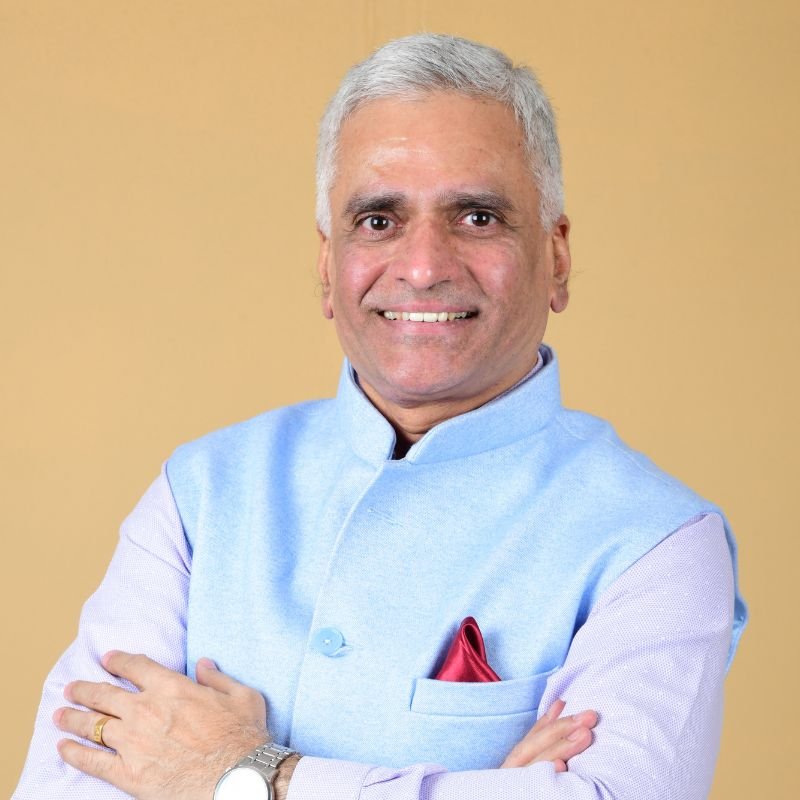
Founder, Chairman & MD, Sarathy Geotech & Engineering Services · Bangalore, India
“Stardom’s editorial team did a fantastic job bringing the book together seamlessly & with high quality. I received wonderful feedback on the presentation and publication of the book.”
Dr. CR Parthasarathy is a geotechnical engineer with over 30 years of experience. Founder & CMD of Sarathy Geotech, he holds a PhD from IISc and mentors engineers in technical excellence and leadership across the globe.
Published by Stardom Books — written from the author’s own words, in the author’s name. Browse the catalogue
Start here
The Authority Quotient is a thirty-minute evaluation that measures your authority two ways — how you rate yourself, and what a stranger can verify — and ends with one specific recommendation, including which type of book is yours.
Find your Authority QuotientNo cost. Get detailed report. Includes specific recommendations.