Where to buy
Carried by Amazon in every market, Barnes & Noble, Walmart, Waterstones, Booktopia, Kinokuniya, Flipkart, Google Books, Apple Books and Kobo. Printed on demand close to wherever it is ordered.
Listed with the worldwide trade network, so any bookstore or library can order it. Ask for it by ISBN: 978-1957456300 (paperback).
What is inside
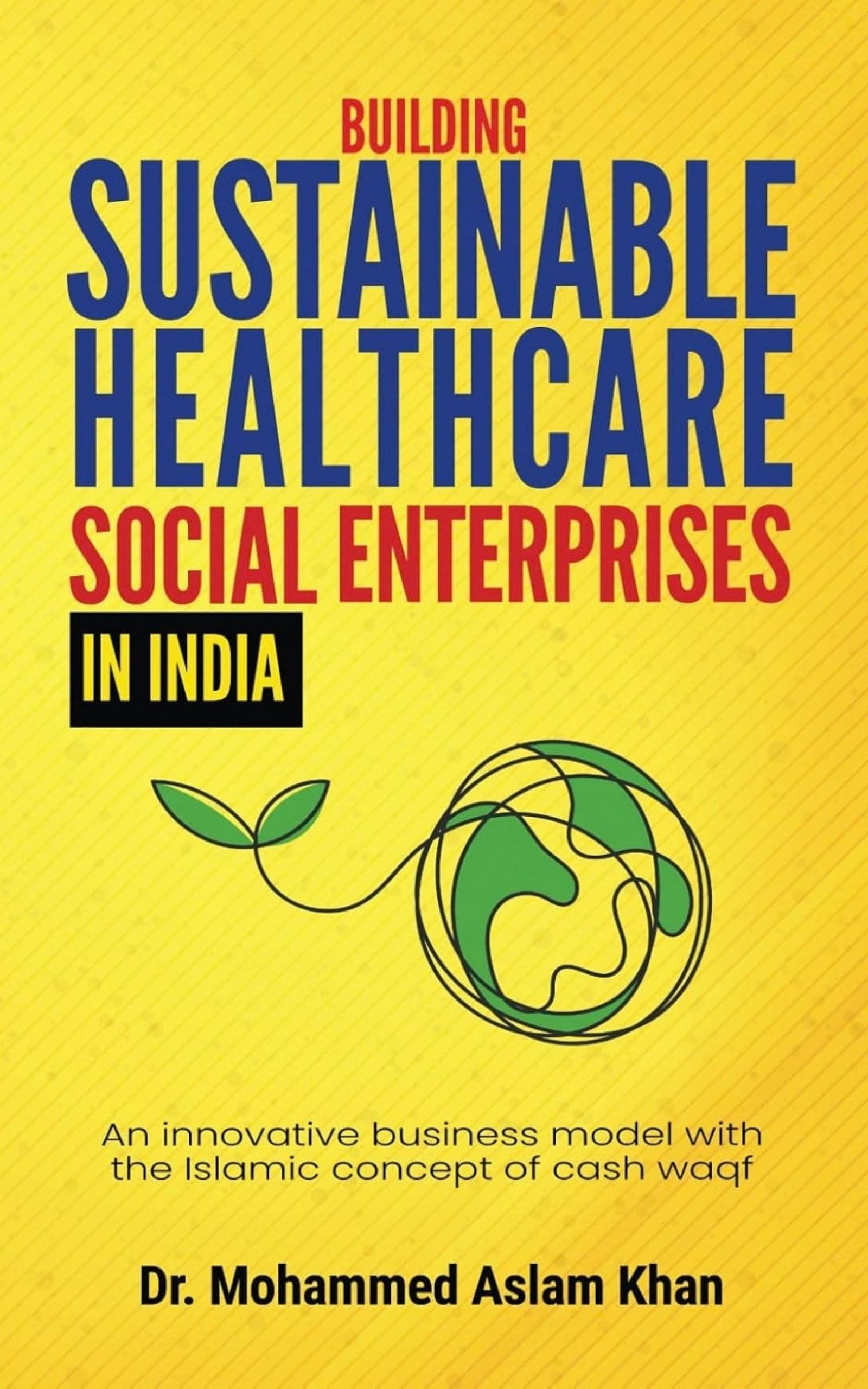
Sustainable Social Enterprise Business Model: Innovating Healthcare in India by Dr. Mohammed Aslam Khan explores the intersection of healthcare, social entrepreneurship, and innovative financing. The book examines the Indian healthcare system and the challenges faced by social enterprises that aim to make healthcare more affordable and accessible without compromising their long-term viability.
A central focus of the book is the relationship between social mission and financial sustainability. It looks at business model innovation, healthcare financing, and the role of social investment in helping enterprises create lasting impact.
The book also introduces the concept of Waqf, an Islamic endowment-based approach to investment, and presents the Sustainable Social Enterprise Business Model, or SSEBM. This model is supported by Cash Waqf investment and is designed to help healthcare social enterprises develop more sustainable structures while continuing to serve social objectives.
For entrepreneurs, the book offers a framework for building ventures that combine affordable healthcare delivery with financial stability. For social investors, it presents an alternative way of thinking about endowment-based investment and long-term societal impact. For academic readers, it provides a model that can be examined, adapted, and potentially extended to other sectors.
The book is written for social entrepreneurs, impact investors, healthcare professionals, researchers, academicians, and students interested in social enterprise and sustainable business models. It is particularly relevant to readers exploring healthcare financing, social investment, Waqf-based models, and practical approaches to balancing social purpose with financial sustainability.
Excerpt
From “Title Page”
India is an abode to one of the world’s largest healthcare systems. According to the International Trade Administration (2022), healthcare has become one of our country’s largest sectors, both in terms of revenue and employment.
The public healthcare sector encompasses 18% of total outpatient care and 44% of total inpatient care. As the second most populous country in the world, India has faced several hindrances in uplifting its healthcare sector. However, regardless of facing humongous challenges, India provides basic healthcare services to over one billion people.
The paradigm of healthcare delivery is dynamic in India and other developing countries. The National Health Policy of India (NHP) recommendations in the past had prescribed for a government funded, three-tiered public health system to deliver curative healthcare services for the well-being of the common masses. In general, India has a mixed healthcare system, which is inclusive of public and private healthcare assistance contributors.
The government comprises limited secondary care institutions and enhances on supplying basic healthcare services in rural areas. The healthcare services to people are provided by the government through hospitals, dispensaries, health centers and clinics. The Ministry of Health and Family Welfare at the state level has the responsibility of delivering primary healthcare services including maternal and child health services.
Primary health care is offered in public hospitals by central and state governments in the urban area with no cost known as Urban Health Centre, and in the rural areas with the name Primary Health Care (PHC). In contrast to this, the private sector focuses on secondary and tertiary care institutions mostly in metropolitan areas.
Assessment of the Healthcare System
The Indian healthcare sector is growing at a rapid pace due to its strengthening coverage, services, and increasing expenditure by public and private players. The basic principles of healthcare are— Active participation of all segments of the population in strengthening and preserving the health of the population, responsibility of society and the state for the protection and promotion of public health, training of medical personnel, creating a common health system, ensuring the preservation and strengthening of public health, conservation and development of professional direction in health care etc.
The main functions of healthcare are— provision of health services, providing the necessary material and human resources, financial services to pay for health services, ensuring the activities of the various healthcare actors in strategic areas. According to the World Health Organization (WHO), modern health systems must achieve the following basic goals— improve the health of the nation, increase the adequacy of the healthcare system to patients, ensure fairness in the distribution of financial burden among participants in the health system.
However, the healthcare system of India lacks provision, utilization, and attainment. There are numerous distributions of services, power, and resources that have created a lack of equality in healthcare services.
Trailer
About the author

Founder , Chairman & MD, Octaware Technologies · Mumbai, India
Dr. Mohammed Aslam Khan is the Founder, Chairman and Managing Director of Octaware Technologies Limited and Transpact Enterprises Limited. He is also a founding trustee of RIDA Foundation and serves in professional and non-profit roles.
Published by Stardom Books — written from the author’s own words, in the author’s name. Browse the catalogue
Start here
The Authority Quotient is a thirty-minute evaluation that measures your authority two ways — how you rate yourself, and what a stranger can verify — and ends with one specific recommendation, including which type of book is yours.
Find your Authority QuotientNo cost. Get detailed report. Includes specific recommendations.