Where to buy
Carried by Amazon in every market, Barnes & Noble, Walmart, Waterstones, Booktopia, Kinokuniya, Flipkart, Google Books, Apple Books and Kobo. Printed on demand close to wherever it is ordered.
Listed with the worldwide trade network, so any bookstore or library can order it. Ask for it by ISBN: 9781973896166 (paperback).
What is inside
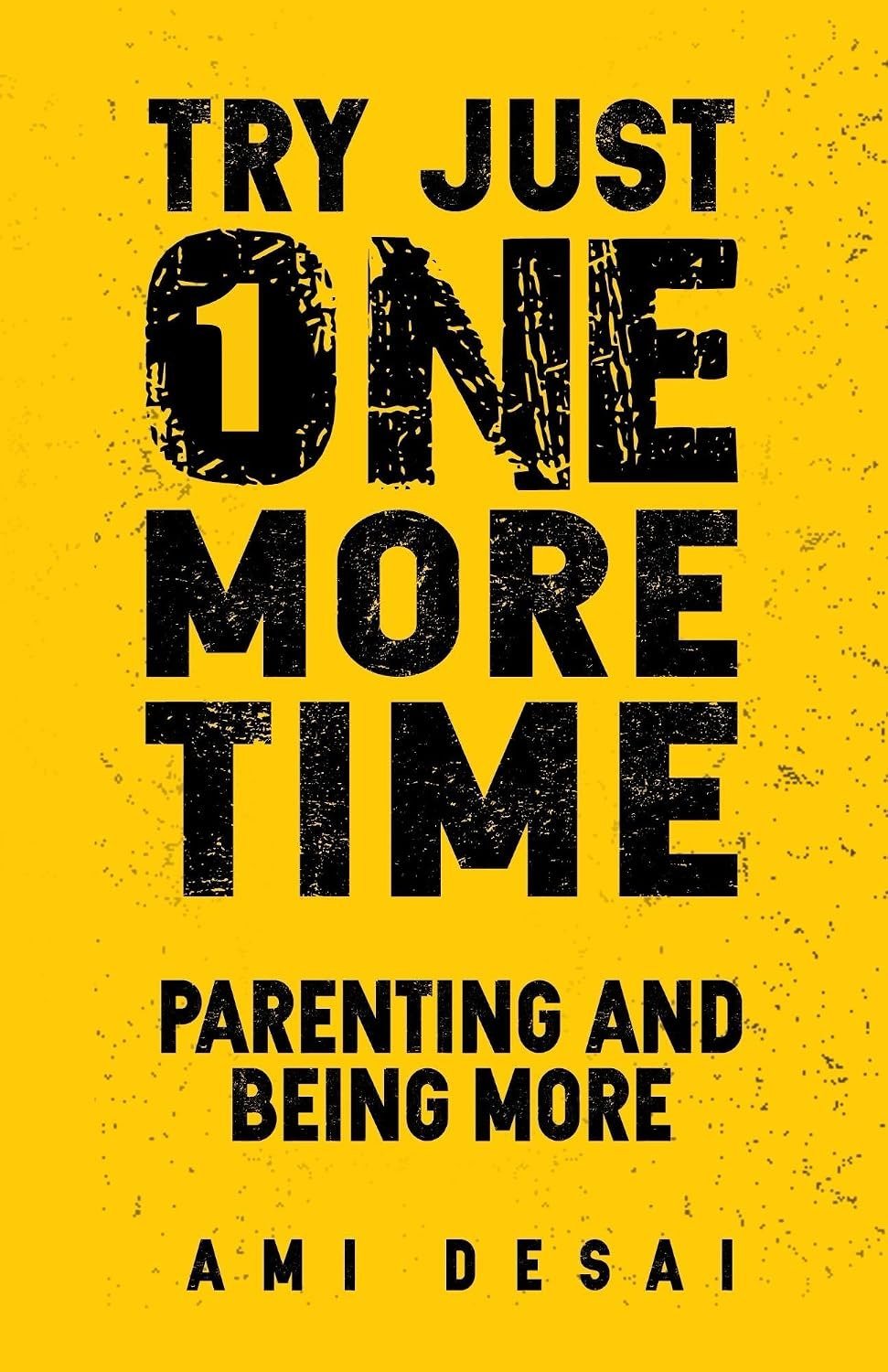
Try Just One More Time: Parenting And Being More explores parenting alongside the broader journey of personal development, self-awareness, and purposeful living. Drawing from Ami Desai’s experiences as a mother and educator, the book reflects on the questions that shape how people understand themselves, respond to challenges, and support the growth of those around them.
The book examines the value of preparation, problem-solving, resilience, and continuous learning. It encourages readers to look beyond conventional ideas of work-life balance and consider growth across multiple areas of life, including the spiritual, social, mental, physical, and financial dimensions.
Through personal experiences and practical reflections, Ami explores how greater self-awareness can influence parenting, education, leadership, relationships, and everyday decision-making. The emphasis is on being prepared for uncertainty, understanding individual strengths, learning through experience, and continuing to move forward even when circumstances do not unfold as expected.
At its heart, the book is about becoming more conscious of who we are, how we guide others, and how small but persistent efforts can contribute to meaningful personal growth.
Who is this book for?
This book is for parents, educators, coaches, professionals, and individuals interested in personal development and balanced living.
It is particularly relevant to readers who want to become more thoughtful in their parenting, understand themselves better, strengthen their resilience, and pursue growth across different areas of their personal and professional lives.
Excerpt
From “On Parenting, Education, and the Future”
Social scientists say we are living amidst a generation of millennials. Millennials are those that came of age around the year 2000 or later, or those born in or after 1984. What characterizes millennials? While it is difficult to stereotype such a large set of individuals, broadly these are young adults (aged 13-30 now) who are often identified as being tough to manage, self-interested, unfocussed, lazy, ungrateful, and having a deep sense of entitlement. Sure, we have had such people in the past too. But we never had an entire generation in the past that largely conformed to those characteristics.
Do you find millennials around you:
iPhones and such material possessions have become synonymous with identity.
Chatting on phone takes precedence over talking to a person sitting in front of them.
Changing of jobs, even careers, every few months or years, is usual.
Complaining and showing resentment towards parents, lovers, employer, politicians – almost everyone, is a norm.
From getting into a line to pay a bill or booking a cab to travel to another place, they have lost all patience.
As these children come of age and get ready to take charge of the world, does it make you a little bit nervous or worried? Do you think these young adults have the foundation to make a good life for themselves and to deal with the crisis this fast growing and globally connect world will throw at them? I have my doubts.
I wonder where we went wrong? How did we end up being parents, friends, and employers to a generation we call millennials? Experts identify parenting and education as the major factor for this.
As a mother, a counselor, an educator and an image consultant, I have had the opportunity of looking at lives of children, young adults, grown-ups and even old men and women at close quarters. And the study of these lives has helped me refine my ideas of parenting and education. Through this small essay, drawing from experiences of my own life, I’d make an attempt to propose some reasons why we are surrounded by millennials, and how we can possibly reverse this trend.
My Journey:
Born and brought up in Mumbai (then Bombay) to a family of Gujarati businessmen but a scientist grandfather, I had inclination towards both sciences and human behavior. I did my studies in Statistics, but as was the norm of the time, soon got married and moved to Bangalore.
About the author

Ami Desai is an educator, coach, curriculum writer, and mother whose work focuses on leadership, self-awareness, problem-solving, and holistic growth. She believes in preparation, continuous learning, and creating balance across life.
Published by Stardom Books — written from the author’s own words, in the author’s name. Browse the catalogue
Start here
The Authority Quotient is a thirty-minute evaluation that measures your authority two ways — how you rate yourself, and what a stranger can verify — and ends with one specific recommendation, including which type of book is yours.
Find your Authority QuotientNo cost. Get detailed report. Includes specific recommendations.