
I tell people this before they ask, because it saves everybody a great deal of time.
A book will not make you famous.
It will not sell in meaningful volume. Almost none do, including very good ones, and anyone showing you sales projections is showing you fiction.
It will not generate enquiries on its own. It is not a marketing campaign and it does not behave like one.
And nobody can promise you that an AI system will cite it. Those systems are opaque, they change without notice, and anyone telling you otherwise is selling something they cannot deliver.
That list costs me work every year. I say it anyway, because the alternative is a client discovering it in month four.
So here is the claim I can stand behind.
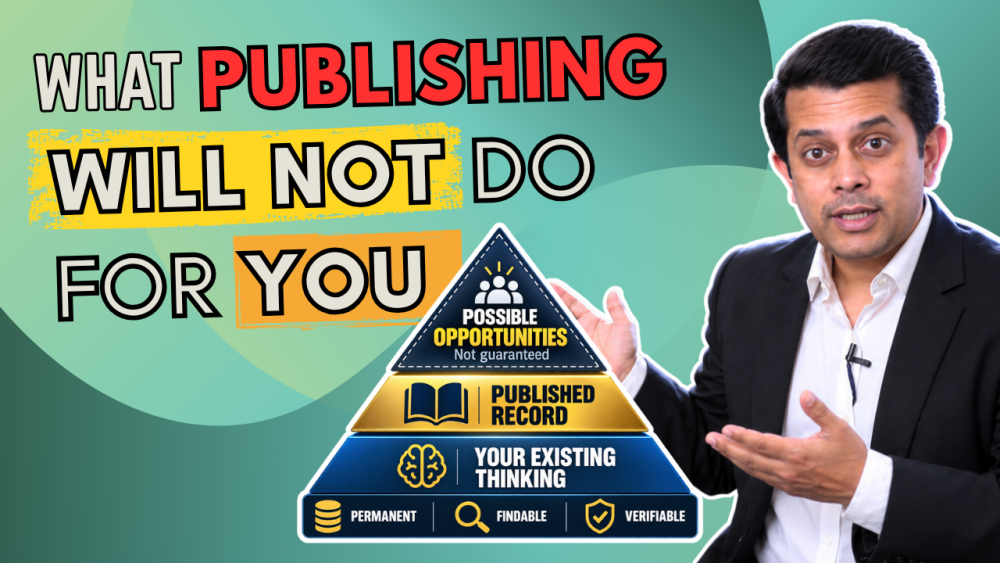
Publishing makes a permanent, findable, independently verifiable record of your thinking exist where none existed before. Everything else depends on that existing first, or it does not happen at all.
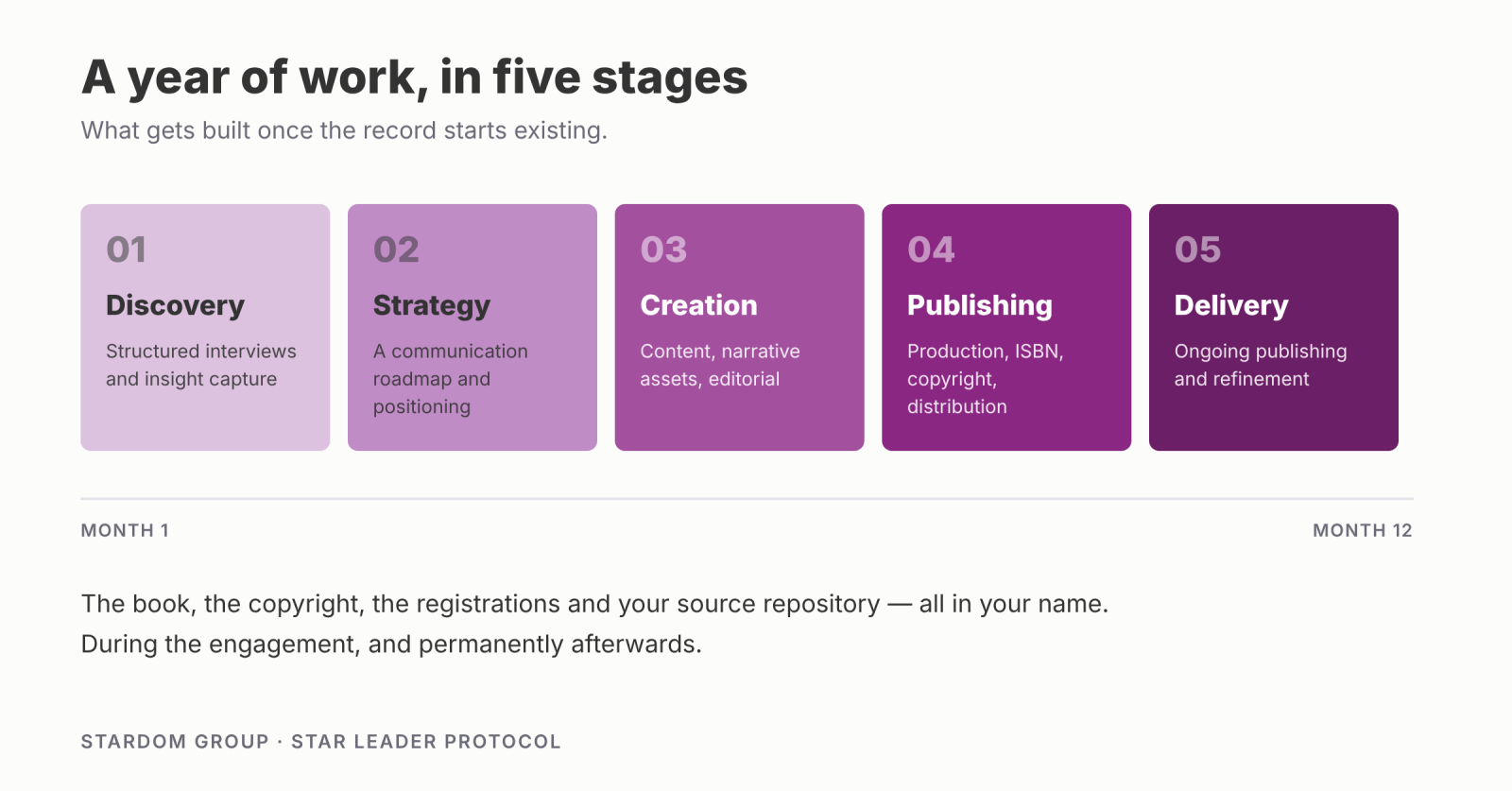
Consider what that actually changes.
A leader with a published body of work is assessed differently from one holding a brochure. The conversation moves from what you charge to what you know, and it starts further along than it used to.
Journalists, boards and search systems have something to point at. Stages, panels and board seats go to people whose position on a subject is already on the record — being on the record is the qualifying step most senior people are missing without knowing it.
And the thinking stops depending on you being in the room to explain it.
That last one is not commercial at all, and it is the part I have come to care about most. Everything a senior person has learned tends to live in one head. It is not written down, and it does not sit anywhere a younger person could find it, argue with it, or build on it. When they stop, it goes with them. The reputation lingers five years, maybe ten. The thinking goes at once.
I have watched this happen often enough that I no longer find it sad in a general way. I find it specific, avoidable, and slightly infuriating.
The leaders who last are not the ones who knew the most. I have met extraordinary people whose thinking vanished within a decade, and considerably less extraordinary people still quoted thirty years on. Talent had very little to do with it. Somebody wrote the second group down.
If a young person in your field wanted to learn how you think — not what you do, how you think — where would you send them?
Raam Anand is a leadership communication and publishing strategist. He has directed over 260 global leaders to become internationally published authors. The Star Leader Protocol program brief is at starleaderprotocol.com.

Founder, Chief Editor and Publisher of Stardom Books, and creator of The Authority Forum. He has directed 260+ leaders to become internationally published authors. About the house · raamanand.com