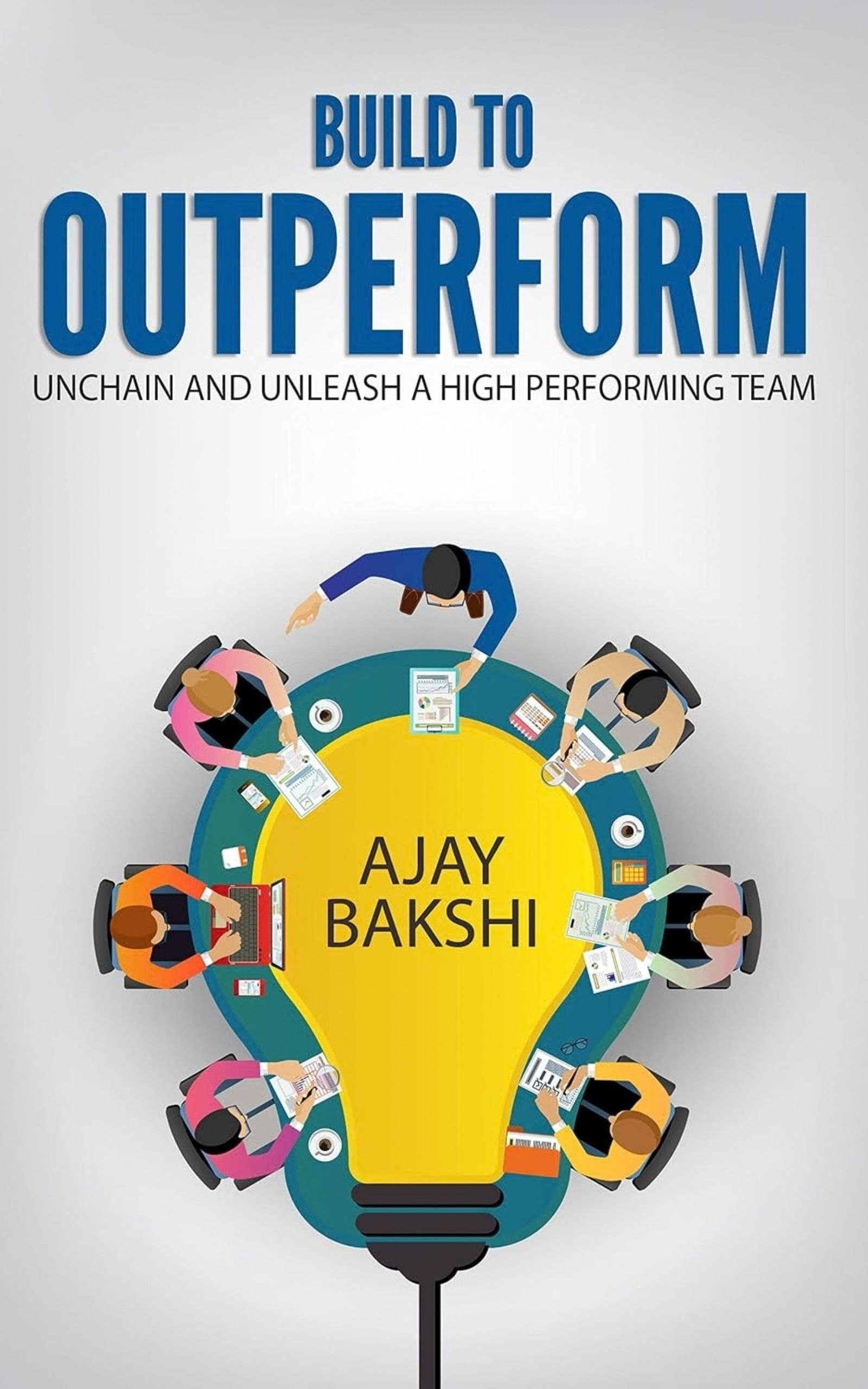
Where to buy
Carried by Amazon in every market, Barnes & Noble, Walmart, Waterstones, Booktopia, Kinokuniya, Flipkart, Google Books, Apple Books and Kobo. Printed on demand close to wherever it is ordered.
Listed with the worldwide trade network, so any bookstore or library can order it. Ask for it by ISBN: 978-1957456034 (paperback).
What is inside
Build High Performing Teams by Ajay Bakshi explores what separates an ordinary team from one that consistently delivers at a high level. Drawing on leadership experience, case studies, and personal observations, the book examines the habits, systems, and people practices that help teams perform with greater clarity and commitment.
The book begins by helping leaders identify current and future leadership gaps. It then looks at how personal leadership aspirations can be aligned with the needs of the organisation and the team. A strong focus is placed on building high performance from the hiring stage itself, ensuring that the right people, expectations, and culture are brought together from the beginning.
Ajay also explores how leaders can sustain performance over time. Topics include employee engagement, motivation, coaching, mentoring, succession planning, and retention. The book considers how leaders can create an environment where people feel challenged, supported, and connected to a shared purpose.
Another important area is the management of virtual teams. As work becomes increasingly distributed, the book addresses how leaders can maintain engagement, accountability, and team cohesion even when employees are not working in the same physical space.
At its core, the book presents high performance as something that must be built deliberately and maintained continuously, rather than expected to happen on its own.
Build High Performing Teams is written for managers, aspiring leaders, HR professionals, functional heads, senior executives, students, and anyone responsible for leading or developing teams. It is particularly relevant to readers seeking practical guidance on team building, motivation, leadership development, coaching, succession, and sustaining performance in changing work environments.
Excerpt
From “Title Page”
20th July 1969, the whole world listened to a statement that shall perhaps remain the most motivating one for the whole of mankind. Neil Armstrong said the above quoted words as he set humanity's first step on the Moon. Today we remember him as the face of the Apollo 11 mission.
The more well-informed ones would also not forget Buzz Aldrin, the second man to set foot on the Moon, and Michael Collins, who flew the Columbia crew module while his two crewmates landed the lunar lander Eagle on the Moon. However, they would just be the faces of the Apollo 11 mission.
The entire project would only succeed because the team did thorough research and preparation. The successful landing on the Moon in 1969; however, the endeavor had started long before that iconic day. It was a national goal set by President John F Kennedy in 1961.
He was very clear in his objective when he said that America had to land a man on the Moon and return him safely to Earth within a decade. National Aeronautics and Space Association (NASA) would roll the ball in a space race to reach the Moon. The Apollo 11 mission began two years prior, in 1967. Even the landing destination was exhaustively studied, with mission planners poring over various data, including the geography of the surface, to find the safest spot.
Moreover, the three men who would fly into space for this momentous occasion would undergo rigorous training to fly to the Moon. Countless analysts, engineers, and technicians believed in that dream set forth by Kennedy and worked hard to put humanity on the Moon. It is one of the best examples of Mission Accomplished from the pages of history.
So, what can we learn from one of the greatest feats in human history? Success can be achieved when you have a clear mission and structure in place. One crucial element of a structure is the team. For the three astronauts to achieve success, many more people worked tirelessly.
This lesson also translates across to the business sector. Let me pose this question: What do you think is the current challenge faced by businesses in terms of consistency, delivery, and converting strategies into action? Any perusal of successful companies and even failed businesses points toward either clarity regarding objectives or the organizational structure.
Trailer
About the author
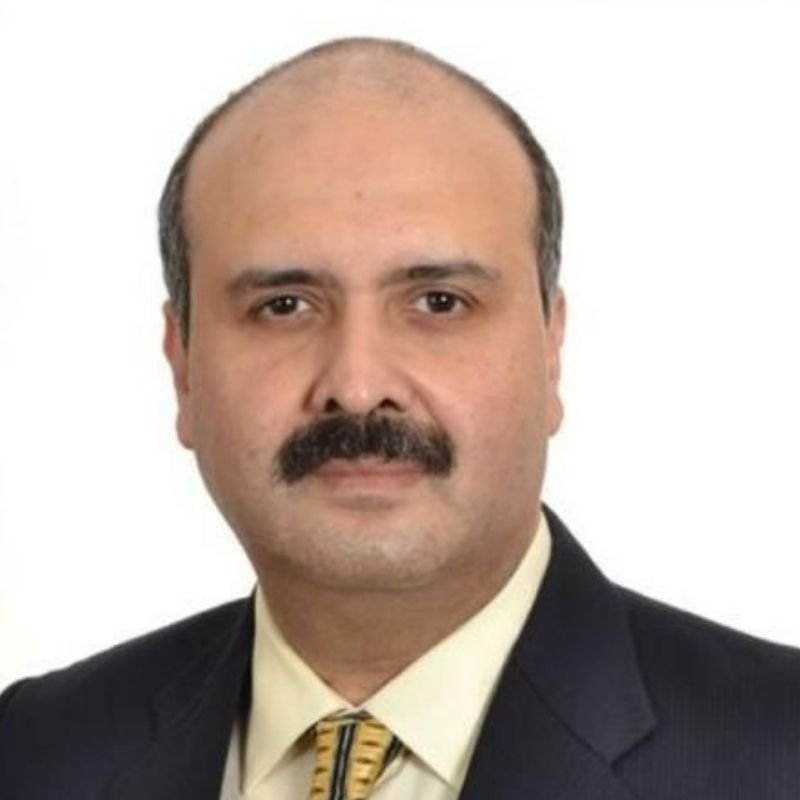
Managing Director, Metamorphosis Unlimited · Pune, India
Ajay Bakshi is a senior HR thought leader with extensive experience in building high-performance teams and developing leadership capability. His work focuses on practical insights, case studies, and sustainable leadership.
Published by Stardom Books — written from the author’s own words, in the author’s name. Browse the catalogue
Start here
The Authority Quotient is a thirty-minute evaluation that measures your authority two ways — how you rate yourself, and what a stranger can verify — and ends with one specific recommendation, including which type of book is yours.
Find your Authority QuotientNo cost. Get detailed report. Includes specific recommendations.